That afternoon at the pub in Kinawley
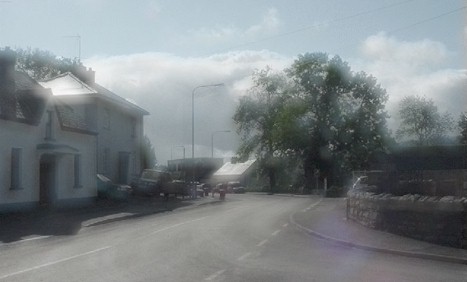 [testing out rhythms here...]
The legend held more answers than I thought anyone might possess. In a redolent Gaelic rhythm I heard how I had chosen to push the stakes in the war higher by deciding to delay my call to the police. How I knew the lunch hour would bring the maximum danger and get the world's attention again when Vietnam and the election in the States was already letting this Irish problem slip off the front pages. How I had made three calls and sent the Army and the Constabulary on a wild chase with confusing calls mentioning different locations. The detail was astonishing: even that word, "Boom," along that rural road as we walked from the telephone, and the far too casual laughter that followed, had been recorded, though now it had been assigned to my lips. But it was the melody that played most eloquently. In this oral tradition that had reached from Belfast back to Derry and then out into hills and villages, and had been repeated in these whispered sagas over more than thirty years, I had not just been instigator and star, but my crimes and the British desperation to catch me had lead the loyal Provo cadres of Derry to arrange a run south, from where I had periodically snuck back in to lead other attacks. I heard myself become a turn-of-the-seventeenth-century The O'Neill keeping the English east of Lough Neagh in ancient and Catholic Ulster, hitting and running in the lost forests; a 1798 Wolfe Tone mixing romantic poetry and rebellion; a 1916 The O'Rahilly rallying the volunteers in the Post Office as O'Connell Street burned under British naval artillery; a 1921 Michael Collins provoking the British into self destructive responses at every turn.
copyright 2005-2006 by Ira Socol


Comments